Audio Content Enhancement Training for Museum Professionals Held in Athens
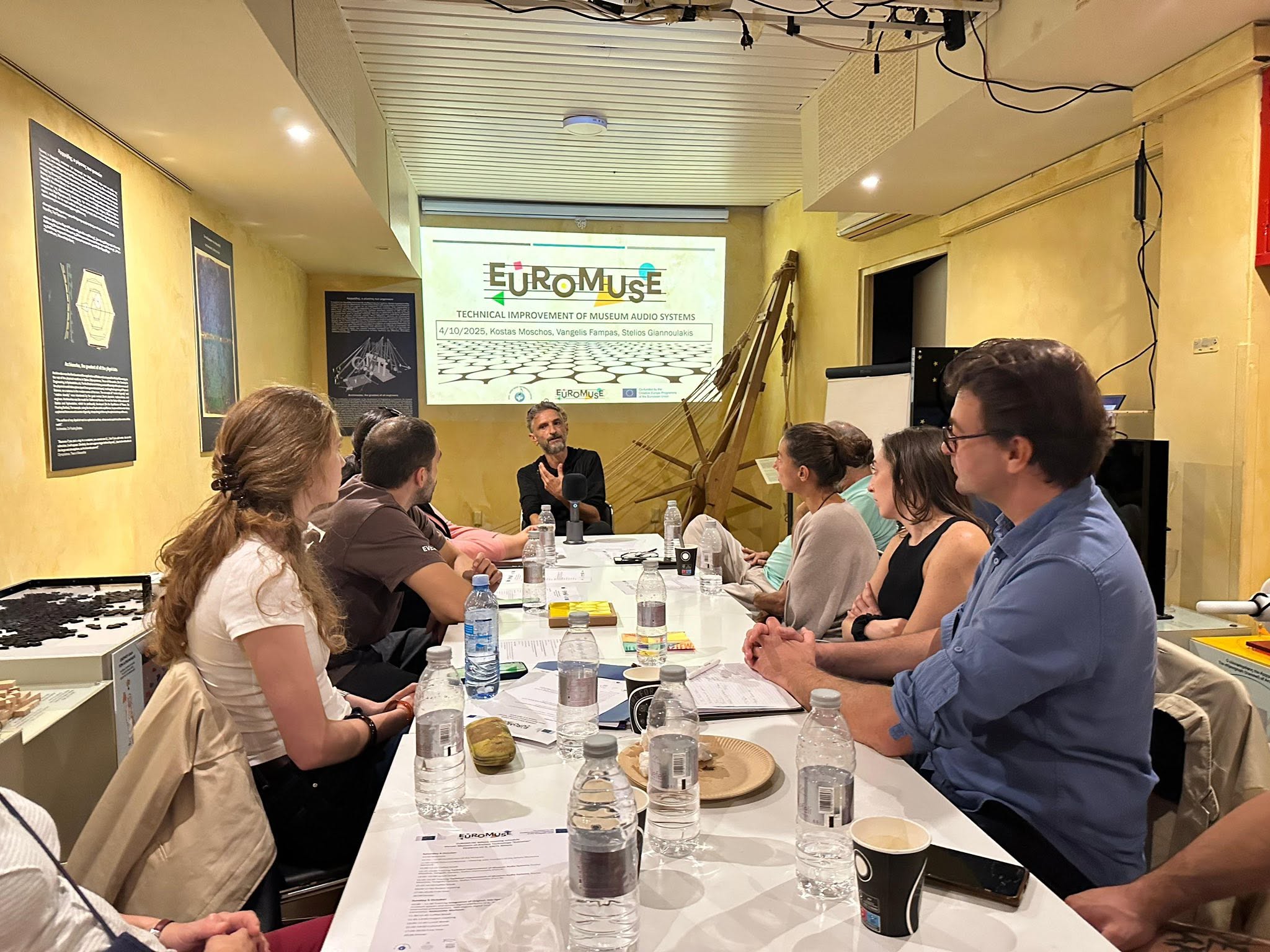
The EUROMUSE team gathered at the Kotsanas Museum of Ancient Greek Technology in Athens for a two-day training programme dedicated to the technical improvement of museum audio systems and the integration of original, site-specific composed music into museum spaces and digital platforms.
The training was organised as part of the EUROMUSE capacity-building activities, with the aim of strengthening the skills of museum professionals in using original composed music as an interpretative, spatial and communication tool.
Day 1: Technical Improvement of Museum Audio Systems
The first day of meetings and training sessions was dedicated to exploring new ways to enhance the museum’s sound environment and improve the technical conditions for the presentation of original music in exhibition spaces.
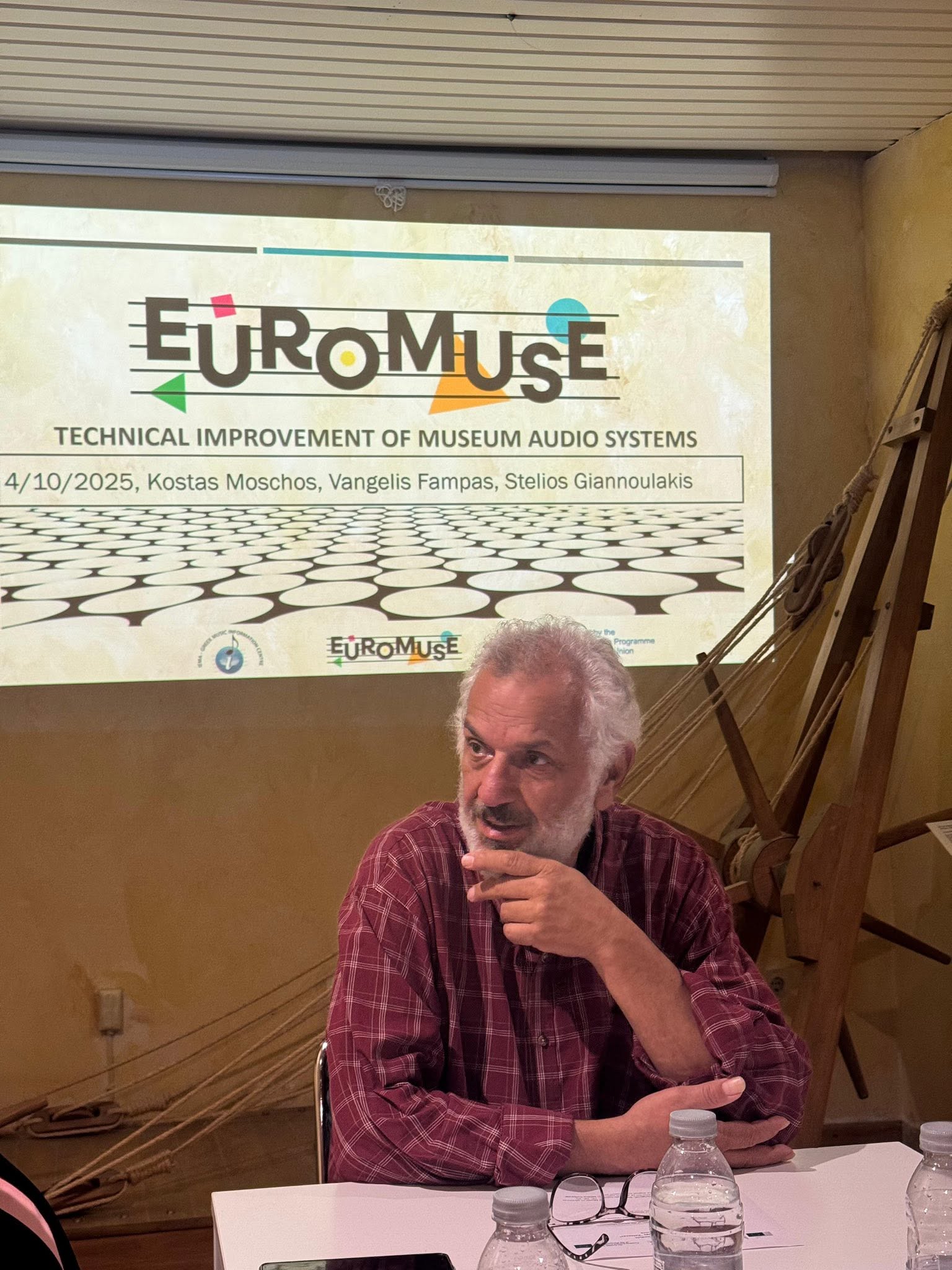
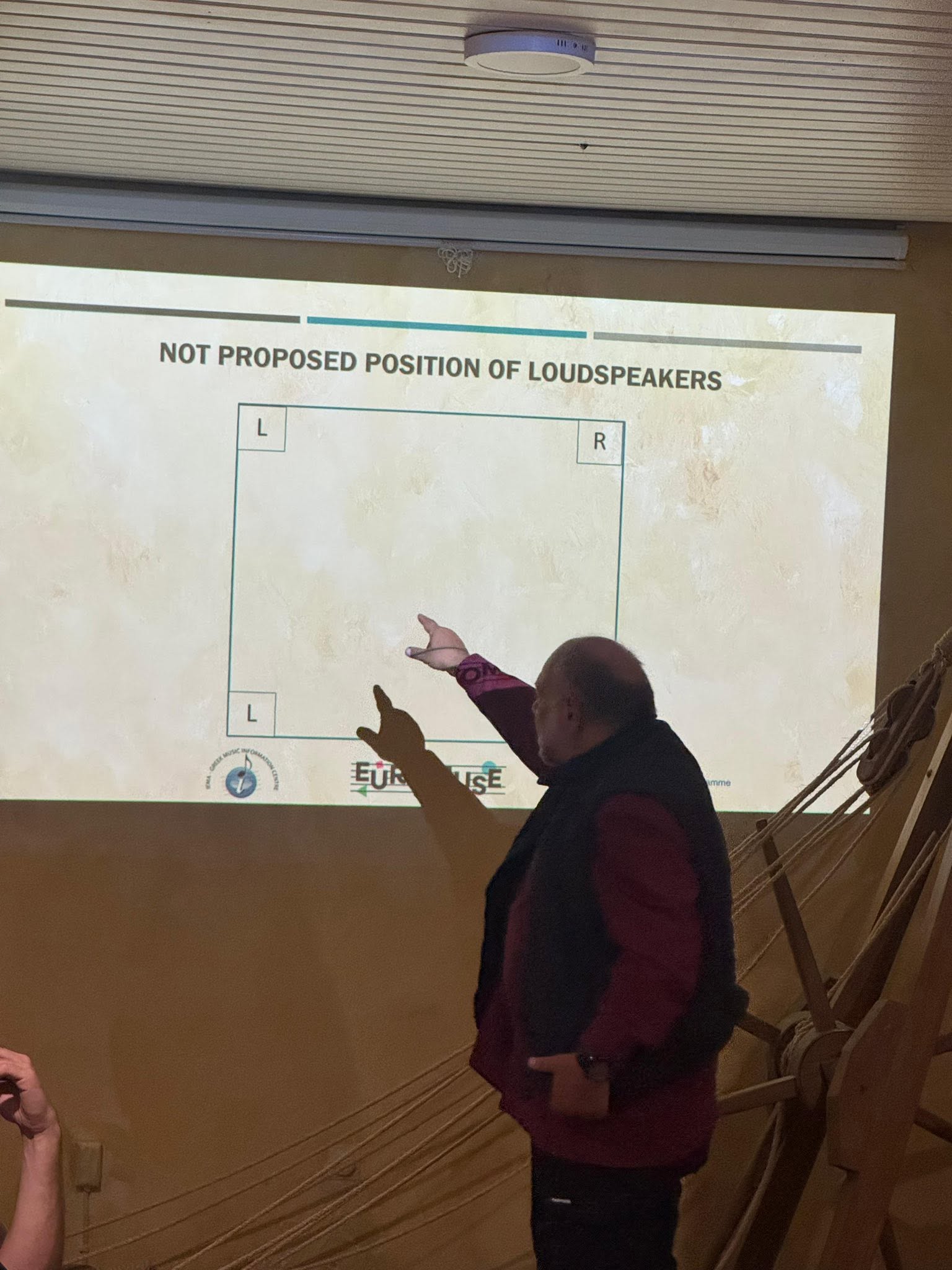
Composer and musicologist Kostas Moschos, composer and sound engineer Vangelis Fampas, and composer and digital production engineer Stelios Giannoulakis led a session focused on the technical improvement of museum audio systems. The session addressed how sound can support visitor experience, museum interpretation and the overall atmosphere of exhibition spaces.
The trainers presented insights into exhibition acoustics, loudspeaker systems, audio signal flow, speaker placement and immersive audio design. From understanding the basic functions of amplifiers and loudspeakers to discussing modern ceiling speaker solutions and spatial sound distribution, the session explored how subtle, carefully designed sound can bring museum spaces and stories to life.
The training also emphasised that music in museums should not be treated as simple background sound, but as a carefully planned element of the visitor experience. In this context, technical preparation, sound levels, acoustic conditions and the relationship between sound and visitor movement are essential for successful implementation.
Day 2: Integration of Original, Site-Specific Composed Music
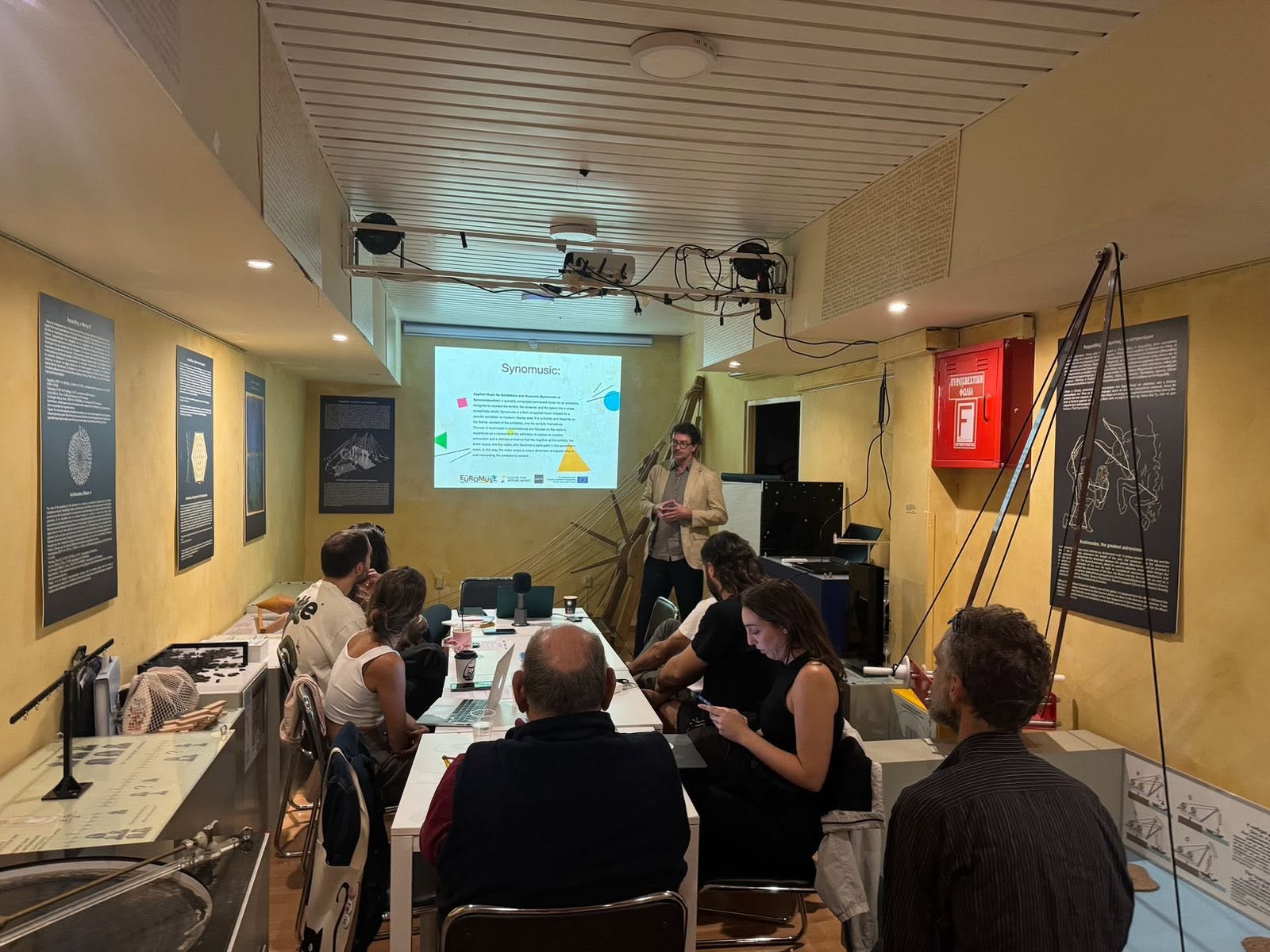
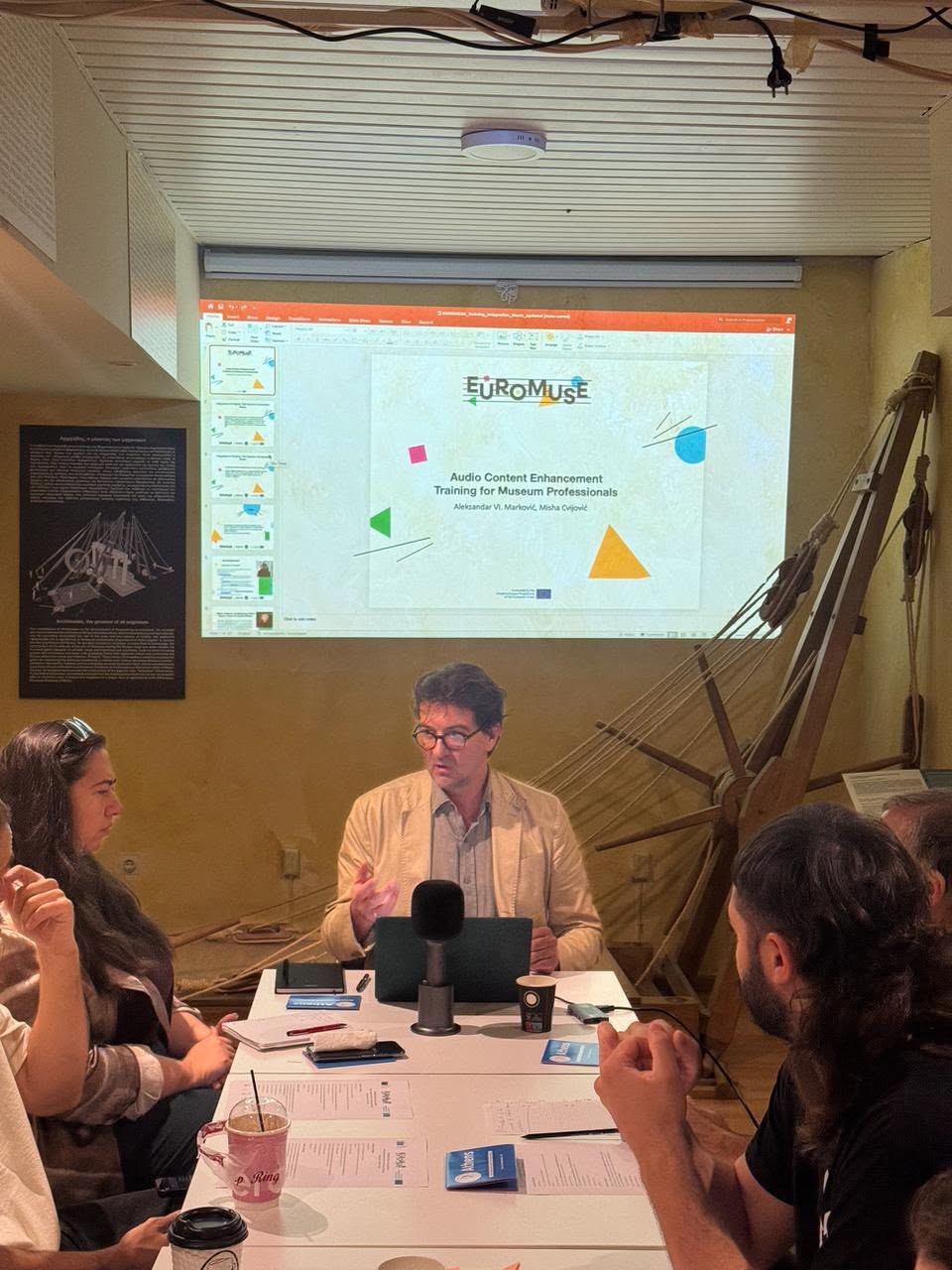
The second day was dedicated to the Audio Content Enhancement Training for Museum Professionals, focusing on the integration of original, site-specific composed music in physical museum spaces and across digital platforms.
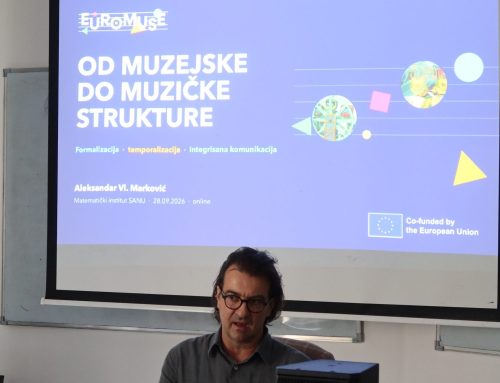
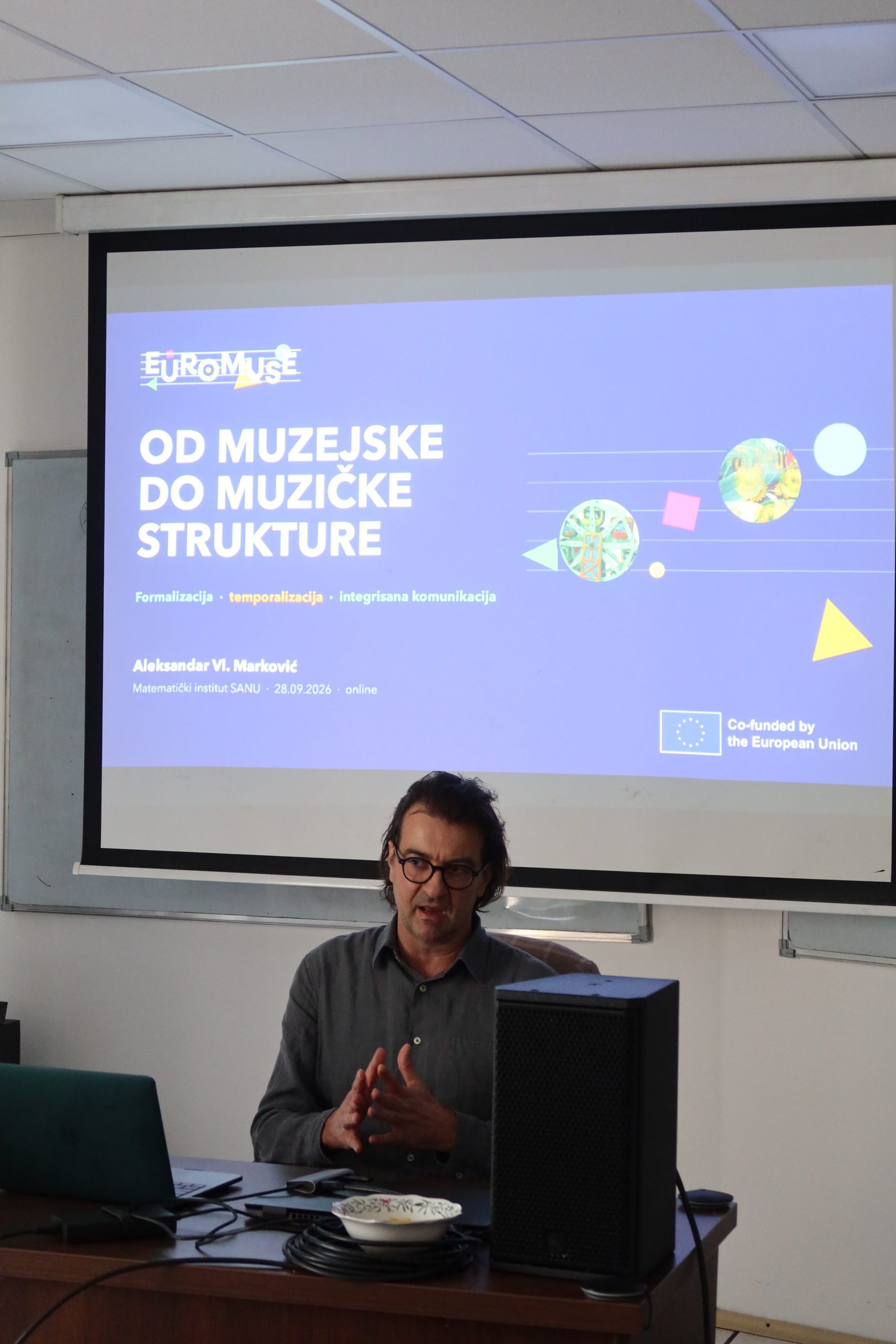
The training was led by Aleksandar Vl. Marković, President of the Centre for Applied Music, and composer Misha Cvijović. Their session explored how original museum-applied music can empower existing museum practices and create new possibilities for interpretation, audience engagement and digital communication.
The training presented the EUROMUSE methodology for the use of original composed permanent music in museum environments. Special attention was given to the relationship between music, exhibition content, spatial experience and visitor perception. The session also addressed how specially composed music can be adapted and reused across extended museum platforms, including mobile applications, VR and AR environments, 3D digital presentations, 360-degree museum tours, websites and social media formats.
Through practical examples and methodological discussion, the training demonstrated how original music can function both as an in-gallery interpretative layer and as a reusable digital asset for museum communication. This approach enables museums to extend the life of their collections and exhibitions beyond the physical space and to reach wider audiences through contemporary digital channels.
The two-day programme in Athens contributed to the professional development of museum staff and strengthened the technical and methodological foundations for the implementation of EUROMUSE compositions in partner museums. It also confirmed the importance of close cooperation between composers, sound experts, museum professionals and digital production specialists in creating meaningful, immersive and accessible museum experiences.
By combining technical audio knowledge with artistic and interpretative methodology, the Athens training represents an important step in the EUROMUSE mission to develop applied music as an innovative tool for museums, audiences and cultural heritage communication.